Findings
Exploring Mimetic Behaviour in the Digital Asset Market
This project set out to examine the effects of mimetic behaviour—the tendency for individuals to imitate others—within the digital asset market. Using price, volume, and sentiment data for Bitcoin, Ethereum, and Solana, our analysis focused on three key aspects: trading volume during different sentiment phases, price behaviour around greed spikes, and volatility across sentiment bands.
1. Trading Volume Increases in Extreme Sentiment Periods
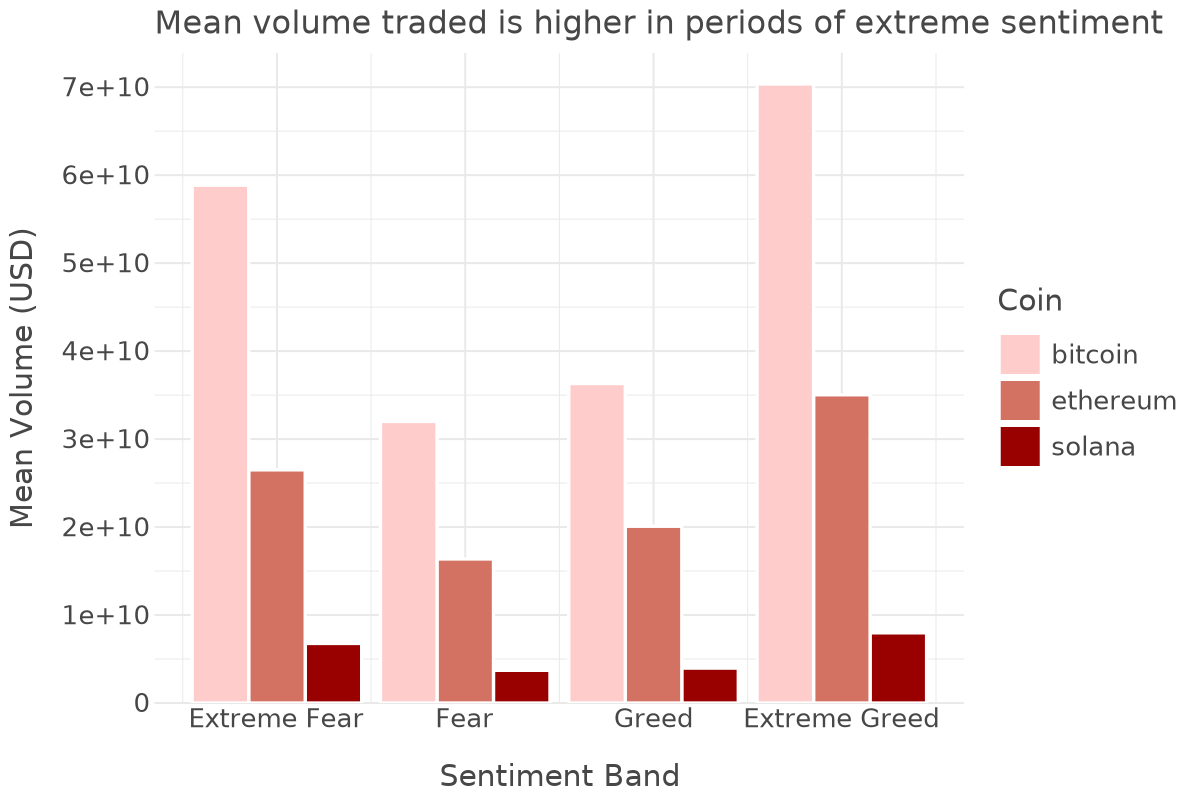
We grouped average trading volume by sentiment bands (Extreme Fear, Fear, Greed, and Extreme Greed). Across all three assets, mean volume traded was significantly higher during Extreme Fear and Extreme Greed, suggesting that emotionally charged environments drive increased trading activity.
This supports the hypothesis that mimetic behaviour intensifies during periods of market emotion, where traders may react not based on fundamentals but by imitating the behaviour of others. The consistency of this pattern across all three coins points to a market-wide herd dynamic, not just isolated anomalies in specific assets.
2. Prices Continue to Rise After Greed Spikes
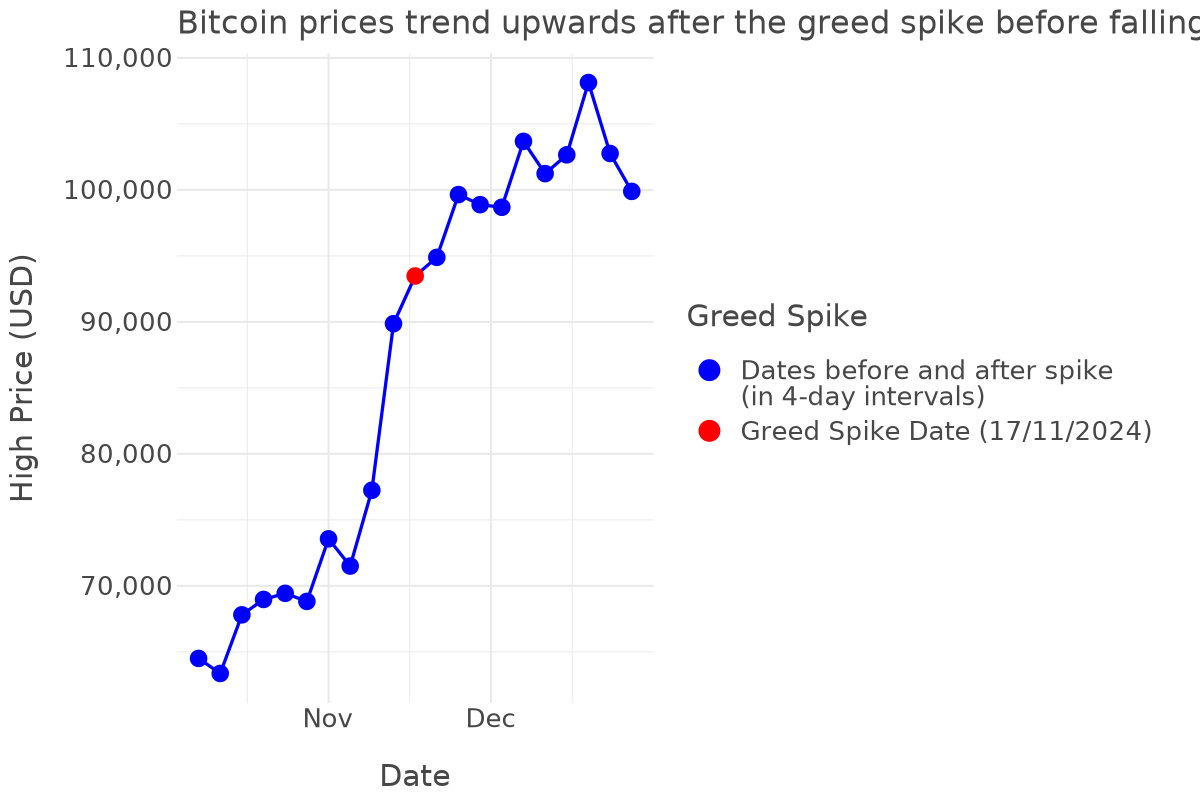
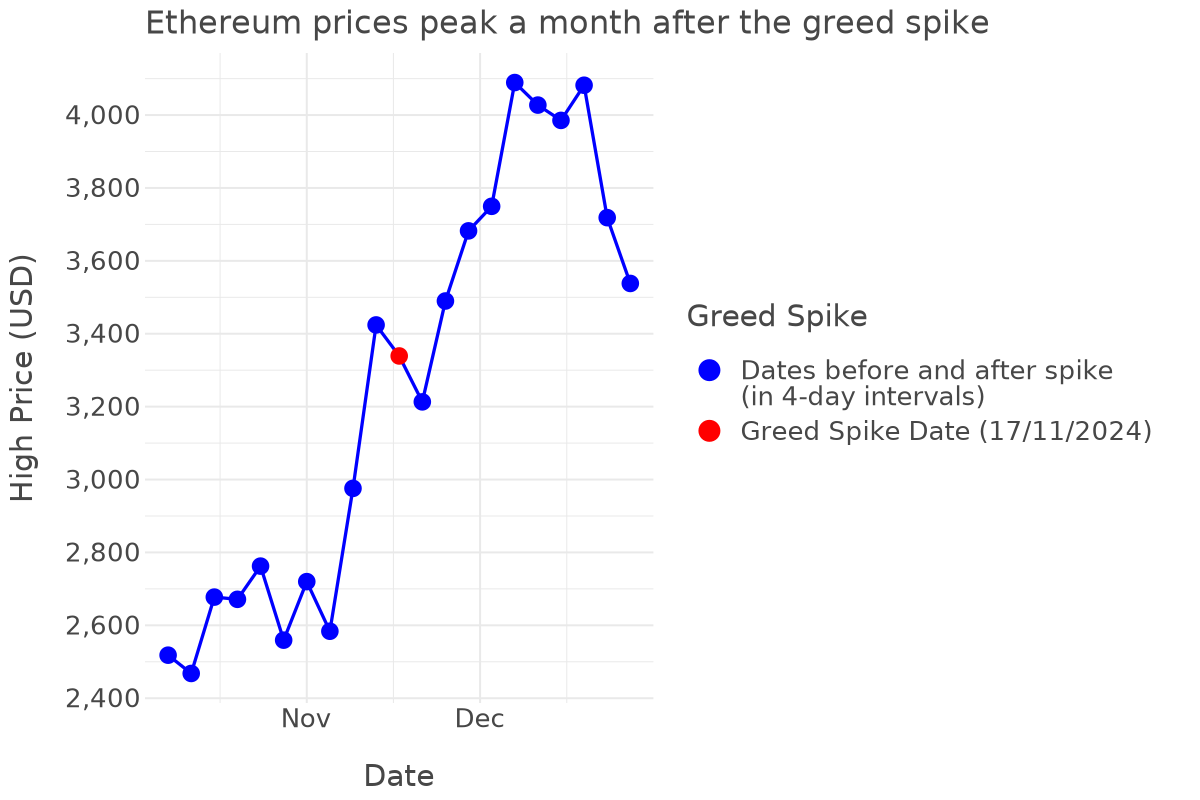
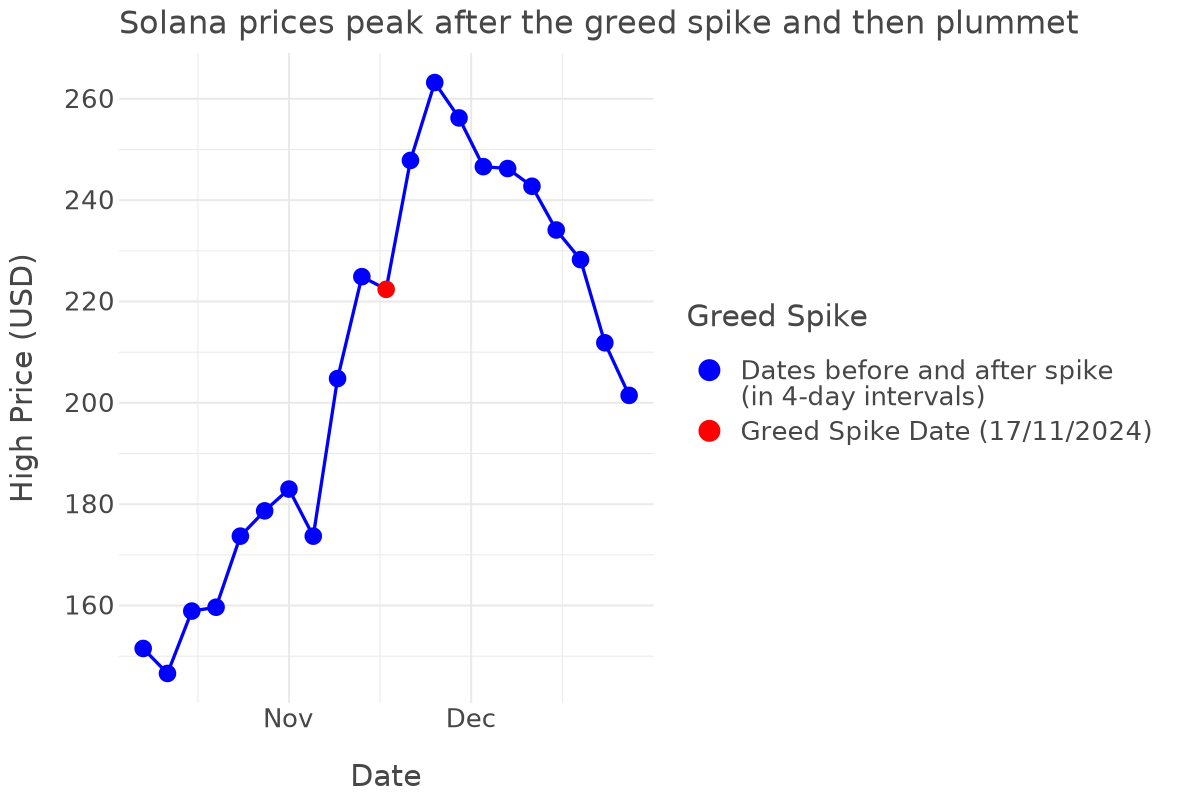
All three coins experienced a peak in greed sentiment on 17/11/2024, with line graphs revealing a clear pattern: prices increase both before and after this spike.
This behaviour suggests a “fear of missing out” (FOMO) dynamic, where traders imitate others’ buying actions even after sentiment has peaked. This prolonged upward movement, especially after the greed spike, indicates that mimetic buying pressure can outlast peak sentiment—an important insight into how emotional contagion sustains price trends.
3. Volatility Peaks During Extreme Greed
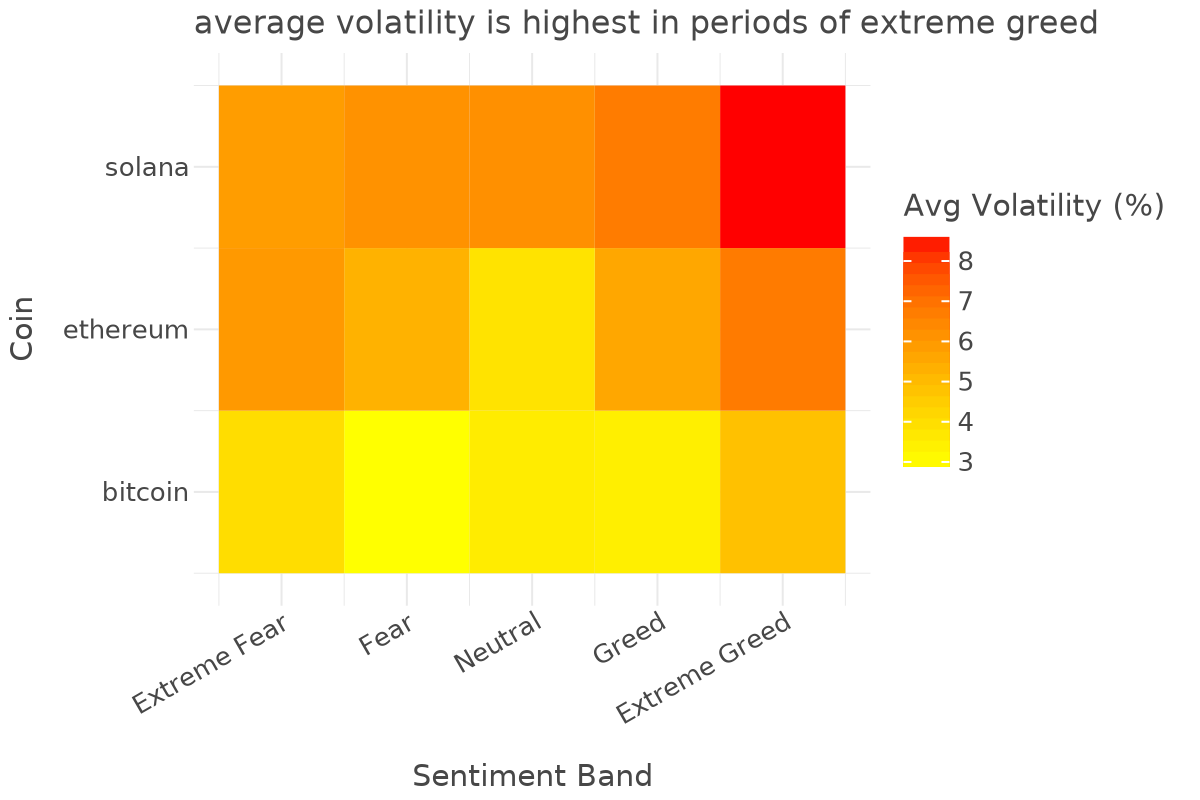
We also calculated average daily percentage volatility across sentiment bands. Volatility was highest during Extreme Greed for all three coins, with Solana displaying higher overall volatility.
This suggests that extreme bullish sentiment fosters not just more trading, but also greater intraday price swings, consistent with erratic or copycat trading behaviour. In contrast, volatility was lower in neutral or moderate periods, indicating that rational trading is more likely when sentiment is subdued.
🔍 Conclusion
Together, these findings provide compelling evidence that mimetic behaviour plays a powerful role in the digital asset market. Whether through increased trading volume, price persistence beyond sentiment peaks, or heightened volatility during extreme sentiment, the data suggests that traders often imitate others during periods of uncertainty or excitement.
Importantly, these patterns are observable across multiple coins, reinforcing the argument that mimetic dynamics are market-wide rather than coin-specific.